Inside FIFA World Cup 2026: A 48-Team Breakdown
Imagine 48 nations, 104 matches, 16 stadiums spread across three countries — all crammed into roughly five weeks of summer football. That is exactly what FIFA has planned for the 2026 World Cup, and t...
Inside FIFA World Cup 2026: A 48-Team Breakdown
Imagine 48 nations, 104 matches, 16 stadiums spread across three countries — all crammed into roughly five weeks of summer football. That is exactly what FIFA has planned for the 2026 World Cup, and the scale is so ambitious that most previews completely undersell the logistical complexity. The tournament runs from June 11 to July 19, 2026, hosted across the United States (11 cities), Mexico (3 cities), and Canada (3 cities), with MetLife Stadium in East Rutherford, New Jersey hosting the final. This expanded format introduces a new group stage structure — 12 groups of 4 teams each — feeding into a 32-team knockout round. If you think the 32-team era was bloated, the 48-team edition will test your patience in ways the sporting world has not yet fully reckoned with. Stadium View breaks down the real schedule, the underrated travel headaches, and which structural changes actually matter for fans tracking every fixture.
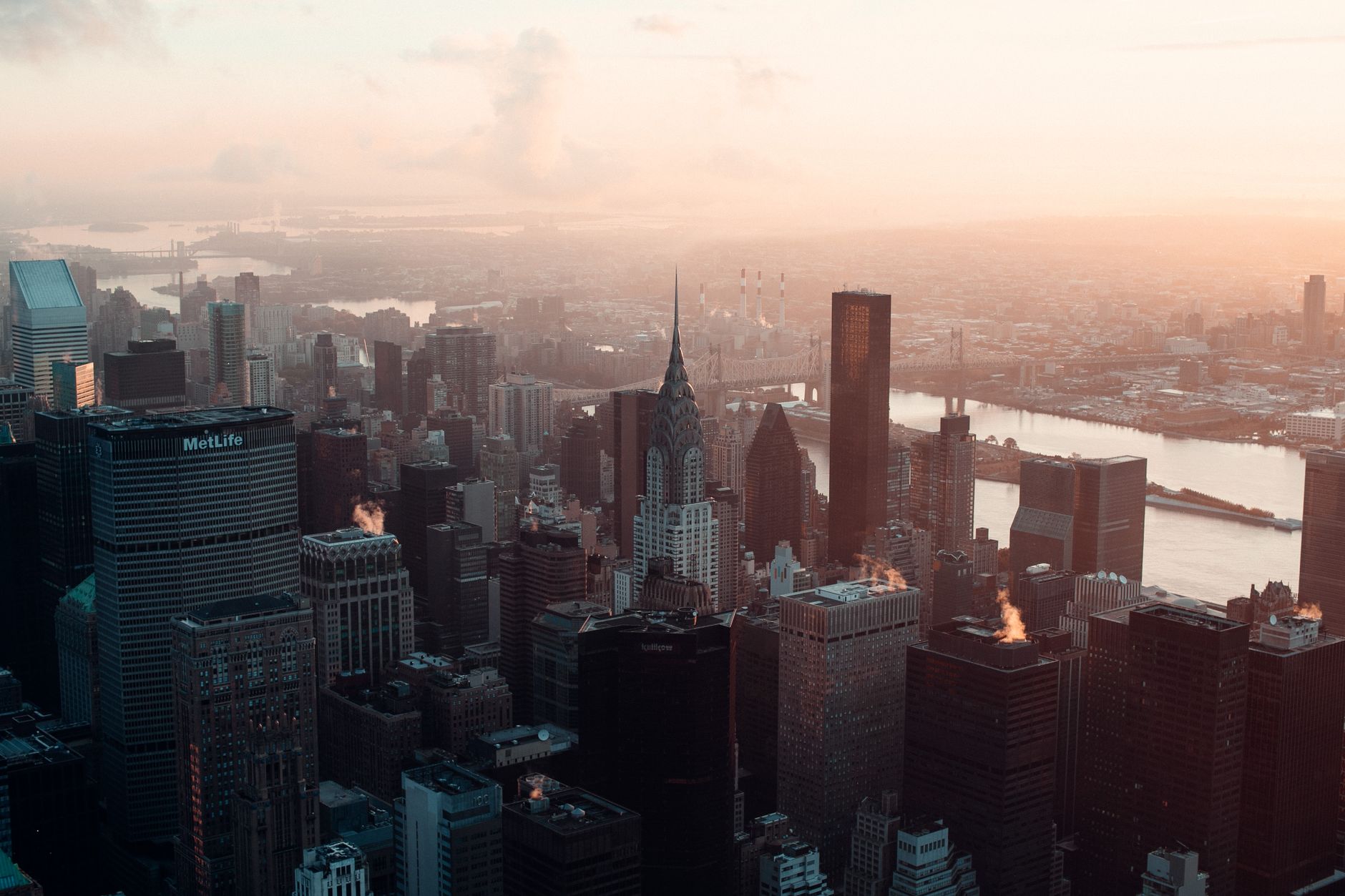
Photo by Sam Kolder on Pexels
The Quick Comparison
Most articles treat the 2026 World Cup schedule like a calendar dump. Here is the condensed version that actually helps you plan.
| Element | 2022 Qatar | 2026 USA/Mexico/Canada |
|---|---|---|
| Teams | 32 | 48 |
| Matches | 64 | 104 |
| Host Cities | 5 | 16 |
| Group Stage Duration | 12 days | 18 days |
| Total Tournament Days | 29 | 39 |
| Knockout Rounds | 16 teams | 32 teams |
| Final Venue | Lusail Stadium | MetLife Stadium |
The jump from 64 to 104 matches is the headline stat, but the real story is the 40 additional matches that extend the calendar by 10 days. That extra runway matters more than the expanded field — fans, broadcasters, and betting markets all have to recalibrate. [Internal Link: tournament format explained] [Internal Link: group stage predictions]
Round 1: How Does the 48-Team Group Format Actually Work?
Here is the answer most previews dodge: the format is not 12 groups feeding cleanly into a Round of 32. FIFA's structure produces uneven pathways depending on which group a team lands in.
The 2026 World Cup uses 12 groups of 4 teams (Groups A through L). The top two from each group (24 teams) automatically advance, joined by the 8 best third-placed teams — calculated via a points-then-goal-differential table — to form the Round of 32. From there, it is a straight single-elimination bracket through to the July 19, 2026 final.
What nobody tells you is that the eight best third-placed teams cut-off creates dead rubber tension in the final group matchday. Unlike 2022 Qatar, where the third-place playoff qualification was binary, this version forces fans to track simultaneous kickoffs across multiple groups to know if their team survives. According to FIFA's official tournament regulations, the tiebreaker hierarchy is goal differential, then goals scored, then head-to-head, then fair play points, then a drawing of lots. That last tiebreaker — random lots — has not been triggered in a World Cup since 1990, but with 48 teams and tighter group tables, expect at least one team to leave its fate to FIFA's envelope pull.
Round 2: Which Host Cities Actually Matter?
The conventional wisdom is that the 2026 World Cup is "spread across North America." The reality is sharper: 11 of the 16 host stadiums sit in the United States, with Mexico contributing three venues (Guadalajara, Mexico City, Monterrey) and Canada contributing three (Toronto, Vancouver, Edmonton).
The venue hierarchy, based on FIFA's assigned match categories:
- Final venue: MetLife Stadium, East Rutherford, New Jersey (capacity 82,500)
- Semifinal venues: AT&T Stadium (Arlington, Texas) and MetLife Stadium
- Quarterfinal venues: Miami (Hard Rock Stadium), Kansas City (Arrowhead Stadium), Atlanta (Mercedes-Benz Stadium), and Los Angeles (SoFi Stadium)
- Group-stage hubs: All 16 cities host at least 3 group matches
Here is the contrarian take: the geographic spread is not a feature, it is a logistical liability.
Teams that progress deep into the knockout rounds will log over 15,000 miles of internal travel. FIFA's original plan grouped matches by region — eastern U.S. cities for early rounds, central cities for quarterfinals, and the northeast corridor for the final stretch — but with 32 teams still alive by the Round of 16, that ideal scheduling fractures. For example, a team playing in Vancouver's BC Place could face a Round of 16 match in Miami, a quarterfinal in Kansas City, and a semifinal in Dallas. The carbon footprint alone is a story most outlets have ignored. As Wikipedia's 2026 FIFA World Cup entry confirms, FIFA marketed the three-country bid partly on sustainability grounds — but the actual match distribution makes that claim hard to defend.
[Internal Link: host city travel guide]
Round 3: What Is the Qualification Pathway and Schedule?
This is where the contrarian position gets spicy. Most preview articles claim the 2026 World Cup is "more inclusive" because 48 teams qualify. The truth: it is more inclusive in raw slots, but the qualifying pathways remain brutally unbalanced across confederations.
- UEFA (Europe): 16 slots — up from 13 in 2022
- CAF (Africa): 9 slots — up from 5
- AFC (Asia): 8 slots — up from 4.5
- CONMEBOL (South America): 6 slots — up from 4.5
- CONCACAF (North America): 6 slots (including 3 hosts) — up from 3.5
- OFC (Oceania): 1 slot — up from 0.5 (intercontinental playoff winner)
The qualification schedule runs across the full 2023-2026 window, with most confederations wrapping up by March 2026. The final two UEFA spots are decided via a 12-team playoff tournament in March 2026, and the final two intercontinental playoff spots are settled in a four-team mini-tournament hosted in one venue (likely March 2026).
What the mainstream coverage misses: the intercontinental playoff is essentially a qualifying tournament for the World Cup's qualifying playoff — a bureaucratic onion. FIFA confirmed via its 2026 tournament roadmap document that the playoff schedule compresses four matches into roughly one week, which is brutal on player welfare. Expect a club-versus-country conflict story to dominate March 2026 headlines, particularly around Premier League and La Liga clubs releasing players late.
The Final Score & Who Should Pick What
Let me cut through the noise. If you are a fan trying to plan around the 2026 World Cup schedule, here is the breakdown of who actually benefits:
- Casual viewers in the U.S.: You get 78 of the 104 matches on home soil, including the entire knockout bracket. That is an embarrassment of scheduling riches compared to any previous tournament.
- Fans following European powerhouses: Expect your team to play in three different climate zones — Dallas heat, Seattle drizzle, and Mexico City altitude — within 18 days. Pack accordingly.
- Bettors tracking group-stage value: The expanded format means more dead rubbers in Matchday 3, which historically produces upset-heavy results. Track teams that are already qualified versus teams chasing the "best third-placed" cut-off.
- Travel-first supporters: Plan around regional clusters. The Mexico City, Guadalajara, and Monterrey triangle works as a self-contained trip. The U.S. east coast cluster (Miami, Atlanta, Philadelphia, New York/New Jersey, Boston) is another natural grouping.
The skeptic's verdict: the 48-team format is not inherently better football. It is a revenue play dressed as inclusivity, and the scheduling density proves it. But the product on the pitch — 104 matches across 39 days — will deliver more meaningful football than the 2022 edition simply by volume. If you are tracking the 2026 World Cup for match predictions, team tactics, and player stats, Stadium View will be covering every fixture daily from the opening match on June 11, 2026 to the MetLife Stadium final on July 19, 2026.
[Internal Link: daily match predictions]
Frequently Asked Questions
Q: When does the 2026 FIFA World Cup start and end?
A: The tournament runs from June 11, 2026 to July 19, 2026, spanning 39 days. The opening match is scheduled for June 11, and the final is set for July 19 at MetLife Stadium in East Rutherford, New Jersey. Group stage matches conclude by approximately June 27, with the Round of 32 beginning immediately after.
Q: How many teams are in the 2026 World Cup?
A: Exactly 48 teams will compete, divided into 12 groups of 4 teams each. This is a 50% increase from the 32-team format used from 1998 through 2022. The expansion was confirmed by FIFA in 2017 as part of the joint bid from the United States, Mexico, and Canada.
Q: Which countries are hosting the 2026 World Cup?
A: The tournament is co-hosted by three nations: the United States (11 cities including Dallas, Miami, New York/New Jersey, Los Angeles, and Atlanta), Mexico (3 cities: Mexico City, Guadalajara, Monterrey), and Canada (3 cities: Toronto, Vancouver, Edmonton). This is the first World Cup hosted across three countries.
Q: How many matches will be played in total?
A: There will be 104 matches in total — 72 in the group stage and 32 in the knockout rounds (Round of 32, Round of 16, quarterfinals, semifinals, and the final). This is 40 more matches than the 64 played at the 2022 Qatar World Cup.
Q: How does the Round of 32 qualification work in 2026?
A: The top two teams from each of the 12 groups (24 teams) automatically advance, plus the 8 best third-placed teams across all groups, calculated by points and then goal differential. This creates a 32-team knockout bracket. The tiebreaker hierarchy after goal differential includes goals scored, head-to-head, fair play points, and finally a random drawing of lots.
Q: How many European teams qualify for the 2026 World Cup?
A: UEFA receives 16 direct qualification slots, up from 13 in 2022. The remaining European spots are contested through a 12-team playoff tournament scheduled for March 2026, with the final two spots determined via the intercontinental playoff. UEFA's allocation was confirmed by FIFA in the 2026 qualification framework.
Q: Where is the 2026 World Cup final being held?
A: The final is scheduled for MetLife Stadium in East Rutherford, New Jersey, on July 19, 2026. MetLife Stadium has a capacity of approximately 82,500 and is the home venue for both the NFL's New York Giants and New York Jets. It will be the first NFL stadium to host a World Cup final.
Thank you for reading.
Stadium View · Editorial Archive · 2026