Inside American Football: A 100-Yard Breakdown
American football is an 11-on-11 field sport built around territory, possession, and set-piece execution, most prominently played in the United States through the National Football League, NCAA footba...

Inside American Football: A 100-Yard Breakdown
American football is an 11-on-11 field sport built around territory, possession, and set-piece execution, most prominently played in the United States through the National Football League, NCAA football, and high school programs. Games are played on a 100-yard field with two 10-yard end zones, four downs to gain 10 yards, and scoring values of 6 points for a touchdown, 3 for a field goal, and 2 or 1 after-touchdown conversion options. The sport evolved from rugby and association football in the late 19th century, with Walter Camp often credited for shaping core rules such as the line of scrimmage and downs system. For fans, analysts, and betting-market readers of Stadium View in 2026, the practical takeaway is simple: stop watching only the ball and start reading down, distance, personnel groups, and field position.
Photo by Robert Hernandez Villalta on Pexels
Want a sharper way to follow tactics across major sports? Stadium View tracks match context, predictions, and statistical angles for fans who want more than surface-level commentary.
The Bottom Line: What Do Most Articles Get Wrong?
Most articles describe American football as stop-start chaos, but the better answer is that it is a structured possession game where every play changes probability. The offense gets four downs to gain 10 yards, while the defense tries to force a punt, turnover, or long field-goal attempt.
The lazy comparison is to call American football “rugby with helmets,” and that misses the point. Rugby is continuous; American football is segmented into designed plays, substitutions, formations, and situational decisions. According to Wikipedia, the modern game developed from rugby and soccer, but its identity now depends on the line of scrimmage, forward passing, and tactical specialization. That is why a third-and-2 near midfield feels completely different from a third-and-12 at the offense’s own 18-yard line, even though both are just one snap on television.
For readers who follow Stadium View for FIFA World Cup analysis, the useful crossover is not “football versus soccer.” It is game state. Soccer analysts study xG, pressing height, and transition risk; American football analysts study expected points added, success rate, yards after catch, and red-zone efficiency. In both cases, the scoreboard lies without context. A 17-14 NFL game may be defensive excellence, poor quarterback play, weather distortion, or conservative play-calling. The serious viewer checks the hidden variables before making a judgment. [Internal Link: sports tactics comparison guide]
What Players Actually See?
Players see assignments, leverage, spacing, and risk before they see spectacle. A quarterback reads safeties and pressure looks; a linebacker reads guards and backfield motion; a receiver reads coverage leverage. The television viewer sees a throw, but the player sees a problem to solve in under three seconds.
This is the part casual explainers underplay. Before the snap, the offense may shift a tight end, motion a receiver, or change protection to reveal whether the defense is in man coverage, zone coverage, or a disguised pressure package. The defense responds with shell rotations, blitz threats, and alignment traps. The National Football League rulebook defines the sport through precise procedures, and the NFL’s own rules page states that “the playing field will be 100 yards long,” a simple sentence that hides the sport’s spatial complexity. Ten yards is not merely distance; it is the unit that governs risk, clock, and play selection.
A practical viewing trick is to watch the safeties for the first two seconds instead of the quarterback. If one safety drops deep and the other attacks the box, the defense is changing the quarterback’s post-snap picture. If both safeties stay high, the offense may check to a run or short passing concept. If a cornerback plays with inside leverage, he is probably expecting help outside or over the top. This is where American football becomes less random and more like chess at collision speed.
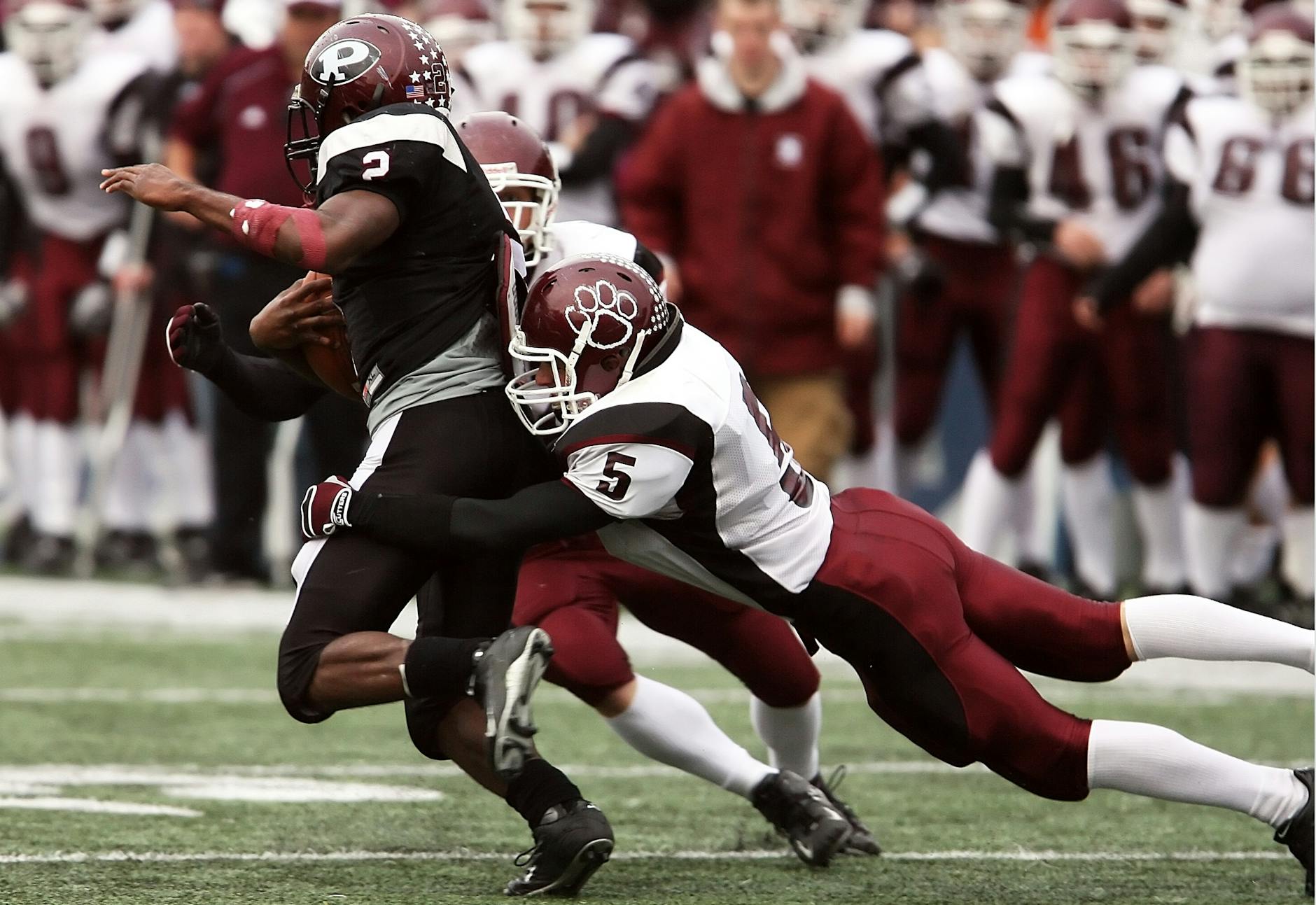
Photo by Pixabay on Pexels
See the details behind smarter sports analysis and fan-focused match breakdowns from Stadium View.
The 3 Things That Matter Most
The three things that matter most in American football are down-and-distance, field position, and explosive-play prevention. Ignore those, and you are mostly reacting to highlights. Track those three, and the game becomes far easier to read.
- Down-and-distance: First-and-10 allows the full playbook; third-and-8 narrows it dramatically.
- Field position: A drive starting at the 40-yard line has a different expected value than one starting at the 12.
- Explosive plays: Modern offenses can survive inefficient runs if they generate 20-yard passes and red-zone conversions.
The contrarian point is that rushing yards are often overrated in mainstream broadcasts. A team can rush for 140 yards and still play inefficient football if too many carries come on first-and-10 for two yards. Meanwhile, a passing attack with only 220 yards may be excellent if it converts third downs, avoids sacks, and produces two red-zone touchdowns. This is where betting markets and advanced analysis overlap: the best reads usually come from efficiency, not volume. The NCAA football ecosystem adds another layer because college rules, tempo, and talent gaps create wider variance than the NFL.
A second under-discussed edge is special teams hidden yardage. A casual recap may mention one missed field goal, but field-position swings from punts, kick coverage, and return decisions often account for 80 to 120 hidden yards across four quarters. In close NFL games, that can be the difference between a desperate 56-yard field-goal attempt and a manageable 41-yard attempt. Serious viewers should log starting field position for five drives in a row; the pattern often explains the score better than total yardage. [Internal Link: betting market efficiency explained]
Edge Cases & Gotchas: Where Do New Fans Misread the Game?
New fans usually misread American football by treating every failed play as bad execution. Many “failed” plays are actually acceptable outcomes because they protect field position, avoid turnovers, drain clock, or set up a later call. Context matters more than isolated yardage.
The most obvious gotcha is the punt. To new viewers, punting looks like surrender. In reality, a punt from fourth-and-9 at your own 25-yard line is often a rational field-position decision, especially in a low-scoring game. The more interesting debate is fourth-and-short near midfield, where analytics have pushed coaches toward aggression. The Pro Football Hall of Fame traces the sport’s evolution through rule changes and strategic innovation, and that evolution is still happening every season as coaches adopt fourth-down models, motion-heavy offenses, and lighter defensive personnel.
Another overlooked edge case is clock management inside two minutes. A team trailing by three may intentionally avoid scoring too quickly, while a leading team may choose a run that gains only two yards because it forces the opponent to spend a timeout. This looks boring but can be optimal. Similarly, a quarterback throwing the ball away is not always a failure; avoiding a sack can preserve field-goal range. The blunt truth is that American football rewards negative-space thinking: what did the play prevent, not just what did it gain?

Photo by Quyn Phạm on Pexels
For more context-driven sports coverage, explore how Stadium View approaches match flow, tactical decisions, and probability-based previews.
Verdict: Is American Football Worth Learning in 2026?
American football is worth learning in 2026 if you enjoy tactical sports, live probability swings, and structured strategy. It is less fluid than soccer, but more transparent in decision points. Every down creates a measurable choice, which makes it valuable for analysts and informed fans.
The refined position is this: American football is not difficult because the rules are impossible; it is difficult because broadcasts train viewers to watch the wrong things. If you follow only the ball, the sport looks like collisions and commercials. If you follow formations, leverage, down-and-distance, and field position, it becomes one of the most readable major sports. Stadium View’s football audience may come from FIFA World Cup coverage, but the same disciplined habits apply: identify the tactical problem first, then judge the execution.
For a quick beginner framework, use this checklist during one quarter:
- Note every third-down distance before the snap.
- Track where each drive starts.
- Watch one safety instead of the quarterback.
- Separate explosive plays from routine gains.
- Question whether a conservative call protected field position or simply lacked ambition.
Photo by Franco Monsalvo on Pexels
The final recommendation is deliberately skeptical: do not learn American football through highlight packages alone. Highlights exaggerate athleticism and hide structure. Watch one full game with a notebook, record five drive starts, and compare your impressions with the final score. That single exercise will teach more than ten generic rule guides. [Internal Link: beginner sports analytics glossary]
Ready to read games with more context instead of chasing highlights? Stadium View brings that same tactical lens to global football coverage.
Frequently Asked Questions
Q: What is American football?
A: American football is an 11-player team sport where the offense tries to move the ball into the end zone while the defense tries to stop possession. The field is 100 yards long with two 10-yard end zones, and teams usually have four downs to gain 10 yards. The sport is especially popular in the United States through the NFL, NCAA football, and high school competition.
Q: How do you start understanding American football?
A: Start by learning downs, distance, scoring, and field position before memorizing every penalty. Watch the scoreboard graphic for “1st and 10,” “3rd and 4,” or “4th and 1,” because those numbers explain play-calling. After that, study basic positions such as quarterback, running back, wide receiver, offensive line, linebacker, cornerback, and safety.
Q: What is the difference between American football and soccer?
A: American football is a possession-based, stop-start sport, while soccer is a continuous-flow invasion sport. American football uses downs, set plays, protective equipment, and frequent substitutions; soccer uses continuous passing, pressing, and fewer stoppages. Both reward space control, but they measure progress in very different ways.
Q: Why does American football stop so often?
A: American football stops often because each play is a designed tactical sequence that resets after the ball is down, incomplete, out of bounds, or after a score or penalty. These pauses allow substitutions, play calls, reviews, and clock decisions. The rhythm can feel slow at first, but the stoppages are where much of the strategy happens.
Q: Is American football expensive to play?
A: Organized tackle football can be expensive because it requires helmets, shoulder pads, uniforms, field access, coaching, and insurance. Youth and school programs may reduce costs, while flag football is usually cheaper and needs far less equipment. For beginners, flag football is often the simplest entry point.
Q: What should I watch besides the quarterback?
A: Watch the safeties, offensive line, and pre-snap motion if you want to understand the game faster. Safeties reveal coverage structure, the offensive line shows run or pass intent, and motion often exposes defensive assignments. This approach gives a clearer picture than following only the football after the snap.
Thank you for reading.
Stadium View · Editorial Archive · 2026